 University of North Texas

Zabella Ramon, a senior graduating in May 2026, grew up in a low-income household, raised by a single mother who worked a series of low-paying jobs to support four daughters. With no extended family and no financial safety net, college was never financially viable for her mother. But she held onto one hope for her daughter: that she would earn her degree and build a different future.
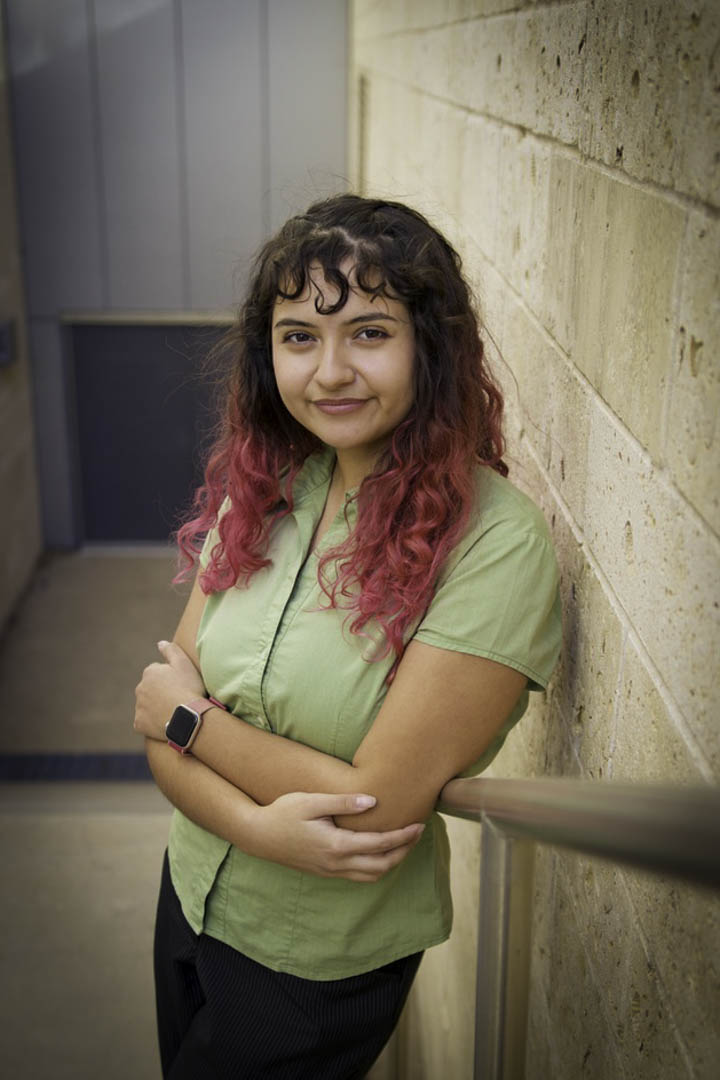
“I don’t think I was housed, fed, and financially stable for this long before coming to UNT,” Zabella said.
She chose to major in finance to understand, and ultimately overcome, the systems that kept her family in a cycle of poverty. Interest rates, debt, and the constant pressures of survival were realities she grew up with. Learning how money works, she said, is how she is learning to change that story.
UNT was the only university Zabella applied to. Its identity as a Hispanic-Serving Institution and its large first-generation student population signaled something important to her, and that was belonging. She found that shared experience reflected not only in her classmates, but in faculty who choose to teach at UNT because of the drive they see in its students.
That same motivation led her to the Student Investment Group (SIG), one of the most selective and demanding organizations in the Ryan College of Business. Each semester, officers review roughly 90 student applications and extend about 12 offers. Members commit approximately 20 hours per week to rigorous, professional-level financial analysis. Beyond technical expertise, SIG develops resilience and the ability to prepare under pressure. Members collaborate across disciplines, engage with industry professionals, and are trusted to take graduate-level coursework while still undergraduates. The result is a sense of capability that extends far beyond the classroom.
“I joined SIG to see if I could, and to encourage more students like me to apply,” Zabella said. “Representation really does matter.”
Notably, she joined SIG before completing core finance coursework. Early on, she worked through valuation models before fully understanding the theory behind them, learning quickly by observing peers and asking questions. Later, when she encountered those same concepts in the classroom, she found herself prepared and confident. The experience, she said, has been humbling but transformative.
“What we do [in SIG] is a gift and a privilege—like playing our part in a grander ecosystem.”
For the alumni and donors who support finance education and first-gen students at UNT, the results are deeply tangible.
“These donations make a real impact,” she said. “I don't think I would be here had it not been for the support from donors and other financial aid.”
And she has seen that impact firsthand, especially during commencement, when first-gen students are acknowledged in the presidential remarks and nearly half of the graduating class stands to be recognized. For her, it is a powerful reminder of the ecosystem of support that makes those moments possible.
The finance program at the Ryan College of Business, as well as the supporting finance student clubs and organizations, are not performative or transactional, she emphasized. They are built on purpose, discipline, and a shared desire to excel among faculty, staff, students, and donors.
“I am going to change the world. With the support of others, good is being done. It’s as simple as that.”
Interested in supporting scholarships for students like Zabella? Reach out to roman.herrington@unt.edu to learn more, or contribute to the College of Business General Scholarship Fund here.