 University of North Texas

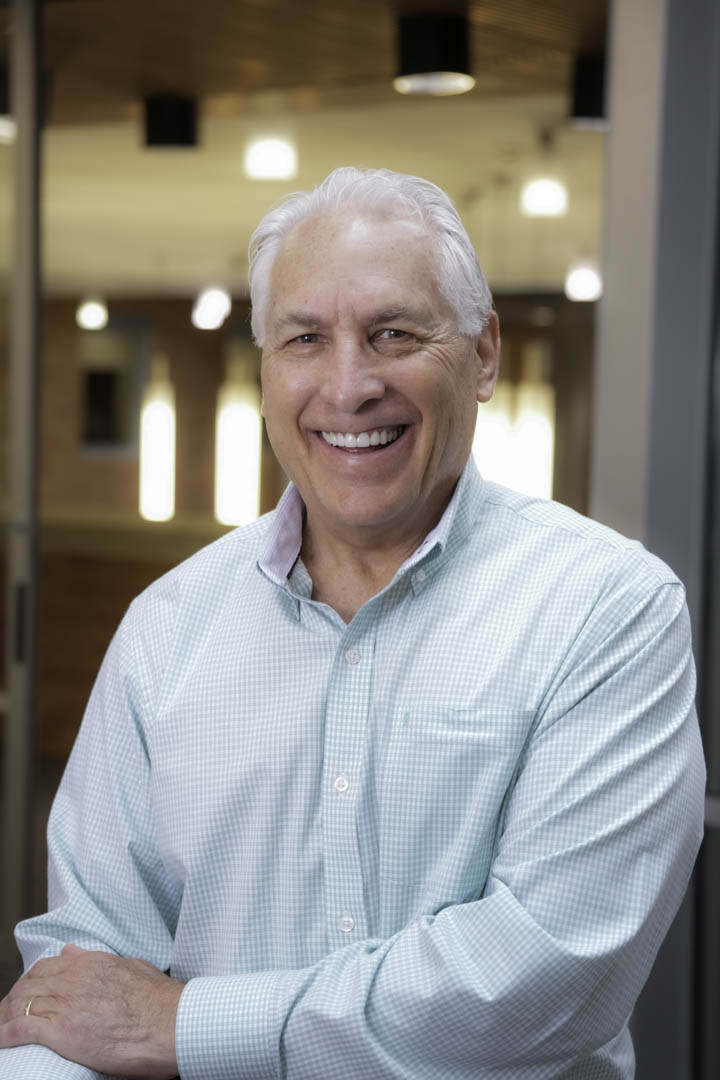 For Len Batcha, leadership has never been about having all the answers, it's about
empowering others to succeed.
For Len Batcha, leadership has never been about having all the answers, it's about
empowering others to succeed.
Throughout a distinguished career spanning supply chain, operations and executive leadership, Len has built his reputation on servant leadership, continuous improvement and a commitment to helping others reach their full potential
Today, Len brings that same philosophy to the G. Brint Ryan College of Business, where he serves as a member of both the Ryan College of Business Advisory Board and the Supply Chain Management Advisory Board. What began as an interest in recruiting UNT logistics students has evolved into a meaningful partnership centered on mentorship, scholarships and student success. Through his engagement with the college and the Professional Leadership Program (PLP), Len has found one of the most rewarding aspects of his career: helping prepare the next generation of business leaders.
In this month's Advisory Board Spotlight, Len reflects on the lessons that shaped his leadership philosophy, the importance of embracing change and why he believes UNT students are uniquely positioned to make a lasting impact in their professions and communities.
Q: Tell us a little about your background. What experiences or influences early in your life helped shape your professional path and leadership philosophy?
A: I was hired by a major healthcare provider as a Public Warehouse Manager early in my career, maybe in my second year of employment. I always had a desire to advance, both to earn higher wages and to fulfill my sense of self-worth. Recognizing what the next-level positions were, I realized I would be competing with several others for a limited number of opportunities. So, I reached out to my manager and asked what actions I could take to become a better supervisor and manager.
The organization happened to be offering a seminar called Making Better Leaders, and my manager allowed me to attend. On the first day, the opening question posed to approximately 50 attendees—most of whom had five to 10 years of service—described several management styles: the hands-on manager, the manager who worked long hours, the manager who engaged in every facet of every decision and process, the manager who did everything themselves because they knew it would be done correctly, the manager who politicked for better budgets or promotions, the manager who attended every meeting available, the manager who allowed employees constant access to them, and finally, the manager who came to the office, did a fair day's work, understood organizational goals, but didn't engage in every day-to-day activity.
The speaker then asked each of us to write down which type of manager we aspired to become and submit our answer anonymously. After tallying the results, he shared them with the group. Most people selected the hands-on manager who worked long hours. There was only one vote for the manager who came to the office, did a fair day's work, understood organizational goals, but didn't engage in every day-to-day activity. That was the one I chose.
The speaker asked who had made that selection. I was a little nervous about admitting it, but I raised my hand. He then praised my choice and explained the traits of an effective leader. A good leader doesn't perform work others are hired to do. They don't schedule meetings or engage in activities that aren't productive to achieving organizational goals. They don't have all the answers but instead seek input to make better decisions, and they don't allow others to delegate upward. That lesson has stayed with me throughout my entire career.
Q: Throughout your career, what lessons have had the greatest impact on the way you approach leadership, relationships and service?
A: I have many and could probably write a book about them. However, three lessons really stand out.
First, somebody is going to move your cheese in your personal or professional life. How you react defines who you are. You can keep coming back to where the cheese used to be and hope for a different outcome, or you can figure out where the cheese moved and go after it. Better yet, you may even find a substitute that's equally or more satisfying.
Second, you will learn more from your mistakes than from your successes. If you're not making mistakes, you probably aren't trying.
Third, quality. When I was first introduced to quality systems, I didn't embrace the impact they could make. I viewed them as just another "program of the month" that would rob my organization of productivity. Boy, was I wrong. I came to realize that quality drives productivity, enhances the customer experience, allows you to become a trusted partner and opens more doors for opportunity. Every facet of our business is now quality-oriented.
Q: When did you first become connected to UNT and the G. Brint Ryan College of Business, and what stood out to you about the institution?
A: I think we're going on six years now. I actually wanted to become engaged more than a decade ago, but I wasn't able to make inroads until my new HR manager helped open some internal doors. I knew UNT had a strong logistics program, and I thought it would be an excellent source for recruiting future employees.
Q: As someone who has worked closely with students and the college, what qualities do you see in UNT students that make you optimistic about the future?
A: I have to give a big shoutout to Dr. Brian Sauser here. Initially, I planned to provide scholarship funding for only one year and recruit students in the short term. When Brian took over the program, his enthusiasm and guidance were contagious, and I became fully engaged.
Since then, I've had the opportunity to meet Dean Marilyn Wiley, Terrance Pohlen, Chris Hanbeck, President Harrison Keller, Roman Herrington, countless professors and fellow advisory board members.
Jose Grimaldo introduced me to the Professional Leadership Program (PLP), and I've had the opportunity to mentor students one-on-one, which has been incredibly gratifying.
What stands out most to me about everyone I interact with at and through UNT is that they simply try harder. Very few people are born with a silver spoon, and I believe that work ethic translates into individuals and teams that are better equipped to overcome adversity, strive for excellence and leave every place a little better than they found it.
Q: What advice would you offer current business students who hope to build meaningful careers and make a positive impact in their communities?
A: Get involved and take advantage of the programs that are available to you. The future can be intimidating and uncertain, but don't let that inhibit you. Instead, embrace it. There are plenty of people willing to help if you're willing to ask and put forth the effort. Approach every opportunity as though you're the smartest person in the room—not with arrogance, but with confidence. You've already accomplished great things, but remember, each achievement is only one brick in the wall.